中文
中文 English
 Русский
Technical Specifications
DTPA-5NA 40% Specification
| Test Items | Standard |
|---|---|
| Content | ≥ 40.00% |
| Specific Gravity (g/ml, 25℃) | 1.25 — 1.35 |
| pH (1% solution) | 11.0 — 12.5 |
| Chelation Value (mgCaCO₃/g) | ≥ 80 |
| Appearance | Clear yellow or light yellow liquid |
DTPA-5NA 50% Specification
| Test Items | Standard |
|---|---|
| Content | ≥ 50.00% |
| Specific Gravity (g/ml, 25℃) | 1.30 — 1.40 |
| pH (1% solution) | 11.0 — 12.5 |
| Chelation Value (mgCaCO₃/g) | ≥ 99 |
| Appearance | Clear yellow or light yellow liquid |
Physical Properties
| Projects | Description |
|---|---|
| Appearance | Clear yellow or light yellow liquid |
| Chemical Formula | C₁₄H₁₈N₃O₁₀·5Na |
| Molecular Weight | 503.25 |
| CAS No. | 140-01-2 |
Product Description
Product Overview
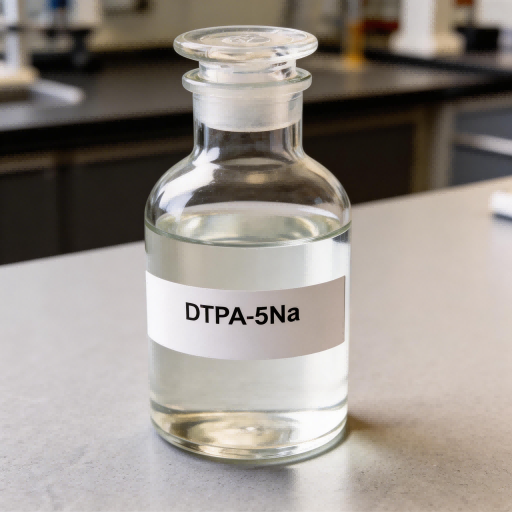
DTPA-5Na solution (DTPA-5NA) is a high-efficiency organic chelating agent solution, CAS 140-01-2, molecular formula C₁₄H₁₈N₃O₁₀·5Na, molecular weight 503.25. The product is a yellow or light yellow clear liquid, available in40% and 50%Two concentration grades available. Remains stable and effective under oxidizing conditions, especially suitable for industrial applications requiring stronger chelating agents.
Core Advantages
- Two Sizes AvailableAvailable in 40% and 50% concentrations to meet different process requirements
- High Chelation Value40% specification chelation value ≥80 mgCaCO₃/g, 50% specification chelation value ≥99 mgCaCO₃/g
- Oxidation StabilityRemains stable under oxidative conditions, suitable for peroxide bleaching processes
- Wide ApplicationPulp and paper, textile manufacturing, oilfield descaling and other industrial fields
Application Guide
Recommended usage for industrial applications
Pulp and Paper — Peroxide Bleaching
- Recommended concentration: 0.5%—2.0% (based on oven-dried pulp weight)
- Usage: Used with peroxides in the bleaching stage
- Effect: Improves bleaching efficiency and reduces metal ion-catalyzed decomposition of bleaching agents
Textile Dyeing & Printing
- Recommended concentration: 0.1%—0.5% (bath ratio 1:10—1:20)
- Usage: Pre-treatment before dyeing or used together with dyes in the same bath
- Effect: Chelates metal ions in water, improving dyeing uniformity and color fastness
Oilfield Scale Removal
- Recommended concentration: 0.5%—3.0% (based on system water volume)
- Usage: Used in circulating cleaning or acidizing descaling processes
- Effect: Effectively dissolves and prevents scaling deposits such as calcium carbonate and calcium sulfate
Precautions:Specific usage and dosage can be adjusted based on actual process conditions. It is recommended to conduct small-scale trials before large-scale application. For technical guidance, please contact our sales engineer.
FAQ
Key differences and selection guide for the two specifications:
- Concentration DifferenceThe 50% concentration has 25% higher active ingredient content than the 40% concentration, with chelating value increased from ≥80 to ≥99 mg CaCO₃/g.
- Specific Gravity DifferenceThe 40% concentration has a specific gravity of 1.25—1.35 g/ml, while the 50% concentration has a specific gravity of 1.30—1.40 g/ml.
- Selection AdviceFor high-concentration scenarios (e.g., oilfield scale removal), choose the 50% concentration; for conventional pulp bleaching and textile printing and dyeing, the 40% concentration is sufficient.
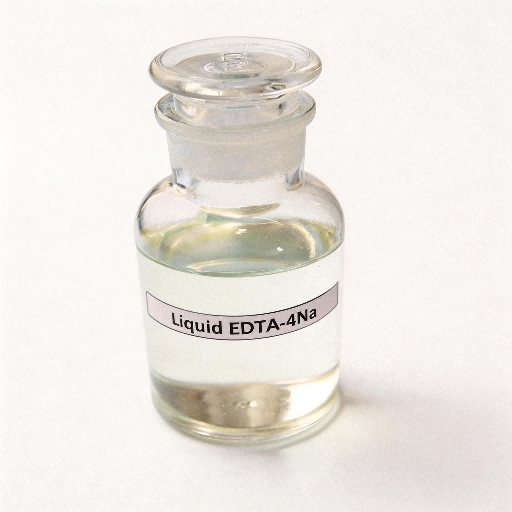
Key differences between DTPA-5NA and EDTA-4NA:
- Chelating GroupsDTPA has 5 coordinating atoms (nitrogen, oxygen), EDTA has 4 coordinating atoms, DTPA has stronger chelating capacity
- Oxidation StabilityDTPA is more stable under peroxide bleaching conditions and is less prone to oxidative degradation
- Applicable ScenariosDTPA is more suitable for oxidizing environments like pulp bleaching and oil field descaling; EDTA is more suitable for routine metal ion chelation
Storage Requirements:
- Keep container tightly closed and dry
- Recommended storage in PVC, PE, stainless steel, or asphalt tanks
- Shelf life: 24 months (stored sealed in original packaging)
Incompatible Materials:Strong oxidizing agents, aluminum, copper, copper alloys, nickel, and zinc
Packaging Specifications:
- Standard Packaging250 kg/drum or 1250 kg/IBC drum
- Custom PackagingOther packaging specifications available upon customer request
Please consult our sales team for minimum order quantity, and we will provide the optimal solution based on your needs.
Send Inquiry
Please fill in the information below, and our business team willwithin 2 working daysReply to you.