中文
中文 English
 Русский
Technical Specifications
Product Type
| Type | Appearance | Key Features |
|---|---|---|
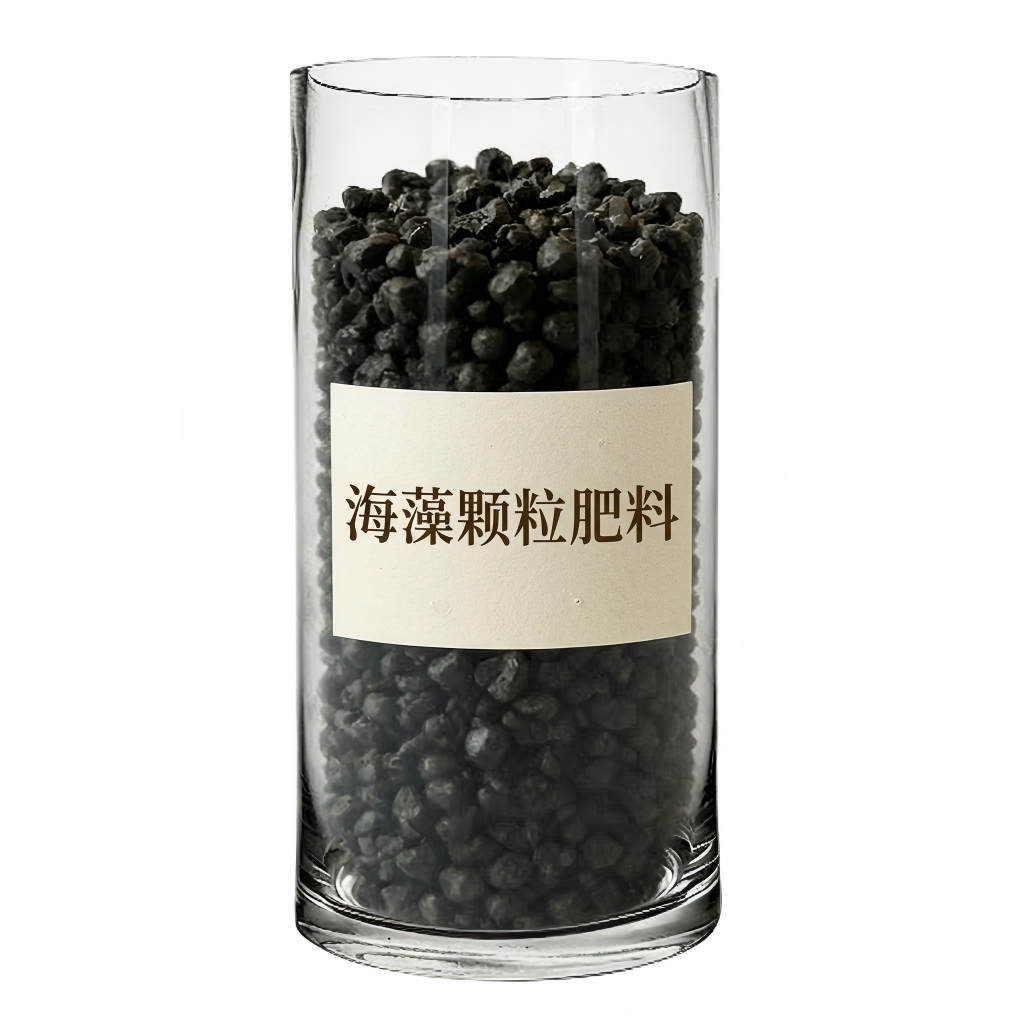
| I型 | Black Granules | Seaweed Organic Granular Fertilizer, suitable for general base fertilizer application. |
| Type II | Black Granules | Seaweed Water-Soluble Granular Fertilizer, Water-Insoluble Matter ≤5%, suitable for drip irrigation systems |
Chemical and Physical Indicators
| Serial Number | Indicator Name | Type I Requirements | Type II Requirements |
|---|---|---|---|
| 1 | Organic Matter | ≥ 60% | ≥ 60% |
| 2 | Seaweed extract | ≥ 30% | ≥ 30% |
| 3 | Moisture | ≤ 15% | ≤ 15% |
| 4 | Water-Insoluble Matter | — | ≤ 5% |
| 5 | Appearance | Black Granules | |
Product Introduction
Product Overview
Seaweed granular fertilizer is a high-efficiency organic granular fertilizer processed from premium seaweed extract. The product is black granules, available in two specifications: Type I seaweed organic granular fertilizer, suitable for general base fertilizer application; Type II seaweed water-soluble granular fertilizer, with water-insoluble matter ≤5%, can be used in drip irrigation systems.
Product Features
- High Organic Matter ContentOrganic matter ≥60%, improves soil structure, enhances soil water and nutrient retention capacity
- High Seaweed ExtractSeaweed Extract≥30%,rich in natural plant growth substances
- Two Specifications AvailableType I is suitable for general base fertilizer, Type II can be used in drip irrigation systems.
- Granular designFacilitates mechanical fertilization with even spreading
- Long-lasting Fertilizer EffectUsed as a base fertilizer to provide continuous nutrient supply for crops.
- Environmentally FriendlyOrganic raw materials, no chemical additives, environmentally friendly.
Core Efficacy
Soil Improvement
Rich organic matter improves soil aggregate structure, enhancing soil aeration, water retention, and fertilizer-holding capacity.
Promotes Growth
Natural biostimulants in seaweed extract promote crop root development and nutrient uptake.
Enhance stress resistance
Enhances crop resistance to stressors such as drought, salinity, and disease.
Improves Quality
Improves the appearance and taste of agricultural products, enhancing their market value.
Applicable Scenarios
Application Guide
Side Dressing (Recommended)
Apply granular fertilizer into planting holes or fruit tree pits as base fertilizer to provide nutrients for crops.
- Application rate per mu: 40-80 kg/mu
- Application Timing: Before Sowing or Transplanting
- Application Method: Mix evenly with soil.
- Note: Cover with soil and water after application
Row Application
Apply in furrows along planting rows, suitable for large-scale mechanized operations.
- Application rate per mu: 40-80 kg/mu
- Application Period: Before sowing or during land preparation.
- Application method: Trench depth 15-20 cm
- Note: Cover with soil and water after application
Scope of Application
| Crop Type | Representative Crops | Recommended Dosage |
|---|---|---|
| Cash Crops | Flowers, tea, tobacco | 80 kg/mu |
| Vegetables | Tomatoes, Cucumbers, Peppers, Leafy Vegetables | 80 kg/mu |
| Melons & Fruits | Watermelon, Melon, Strawberry | 80 kg/mu |
| Grain, cotton, and oil crops | Rice, Wheat, Corn, Cotton, Rapeseed | 80 kg/mu |
| Field Crops | Various Field Crops | 80 kg/mu |
| High-Yield Cash Crops | Orchard and Greenhouse Fruit & Vegetable Cultivation | Increase dosage as needed |
- Suitable for use as a base fertilizer, can be applied by hole or strip application.
- Dosage: 40-80kg/mu. Increase the application rate for high-yield cash crops as needed.
- Store in a cool, dry place, away from direct sunlight and moisture.
- Cover with soil and water promptly after application to promote fertilizer dissolution and crop absorption.
- Can be used in combination with organic and chemical fertilizers for better results.
Frequently Asked Questions
Main Differences Between the Two Types:
- Type I (Seaweed Organic Granular Fertilizer)Suitable for general base fertilizer application, can be applied in holes or rows, applicable to various crops
- Type II (Seaweed Water-Soluble Granular Fertilizer)Water-insoluble matter ≤5%. Suitable not only as base fertilizer but also for drip irrigation systems, offering a wider range of applications.
Recommendation: If only needed for base fertilizer, choose Type I; if also needed for drip irrigation use, choose Type II.
Main Differences:
- Raw MaterialsSeaweed granular fertilizer uses seaweed extract as raw material, while ordinary organic fertilizers use materials like livestock manure and crop straw.
- Nutritional CompositionSeaweed granular fertilizer contains seaweed-specific active substances like seaweed polysaccharides, mannitol, auxins, etc., while ordinary organic fertilizers have relatively single nutrient components.
- EfficacyIn addition to soil improvement, Seaweed Granular Fertilizer also promotes growth and enhances stress resistance.
- Organic Matter ContentSeaweed Granular Fertilizer: Organic Matter ≥60%, exceeding standard organic fertilizer levels
The general recommended dosage is 40-80kg/mu. The specific dosage should be determined based on the following factors:
- Crop TypeHigh-yield cash crops (e.g., fruit trees, greenhouse vegetables) may appropriately increase dosage
- Soil ConditionsBarren soil or newly reclaimed land should have the application rate appropriately increased.
- Planting DensityFor densely planted crops, dosage may be appropriately increased
- Crop Rotation StatusIncrease application rate appropriately for soils under long-term monoculture.
It is recommended to consult professional technical personnel or conduct a small-scale trial for the first use to determine the optimal dosage.
Store in original sealed packaging in a cool, dry, well-ventilated place. Shelf life:24 MonthsStorage Precautions:
- Store in a cool, dry place away from direct sunlight.
- Avoid damp environments to prevent granule caking.
- Avoid contact with sharp objects to prevent packaging damage.
Use promptly after opening; reseal any unused product for storage.
This product has been exported to multiple regions including Southeast Asia, the Middle East, and Europe. Available export documents include:
- Commercial Invoice
- Packing List
- Certificate of Origin (CO)
- Phytosanitary Certificate
- SDS/MSDS (Multilingual Versions)
- Quality Inspection Report (COA)
Send Inquiry
Please fill in the following information, and our business team willWithin 2 Business DaysReply to you.
Same Series Products
More seaweed-based nutrition products to meet the growth needs of different crops