中文
中文 English
 Русский
Technical Specifications
Chemical and physical indicators
| No. | Parameter Name | Specification Requirements |
|---|---|---|
| 1 | Sugar Alcohol Chelated Secondary Elements | ≥ 100g/L |
| 2 | Sugar Alcohol Chelated Trace Elements | ≥ 15g/L |
| 3 | Sugar Alcohol Content | ≥ 140g/L |
| 4 | Nitrogen (N) | ≥ 80g/L |
| 5 | Density | 1.40 — 1.50 |
| 6 | pH (1:250) | 6.0 — 9.0 |
Product Introduction
Product Overview
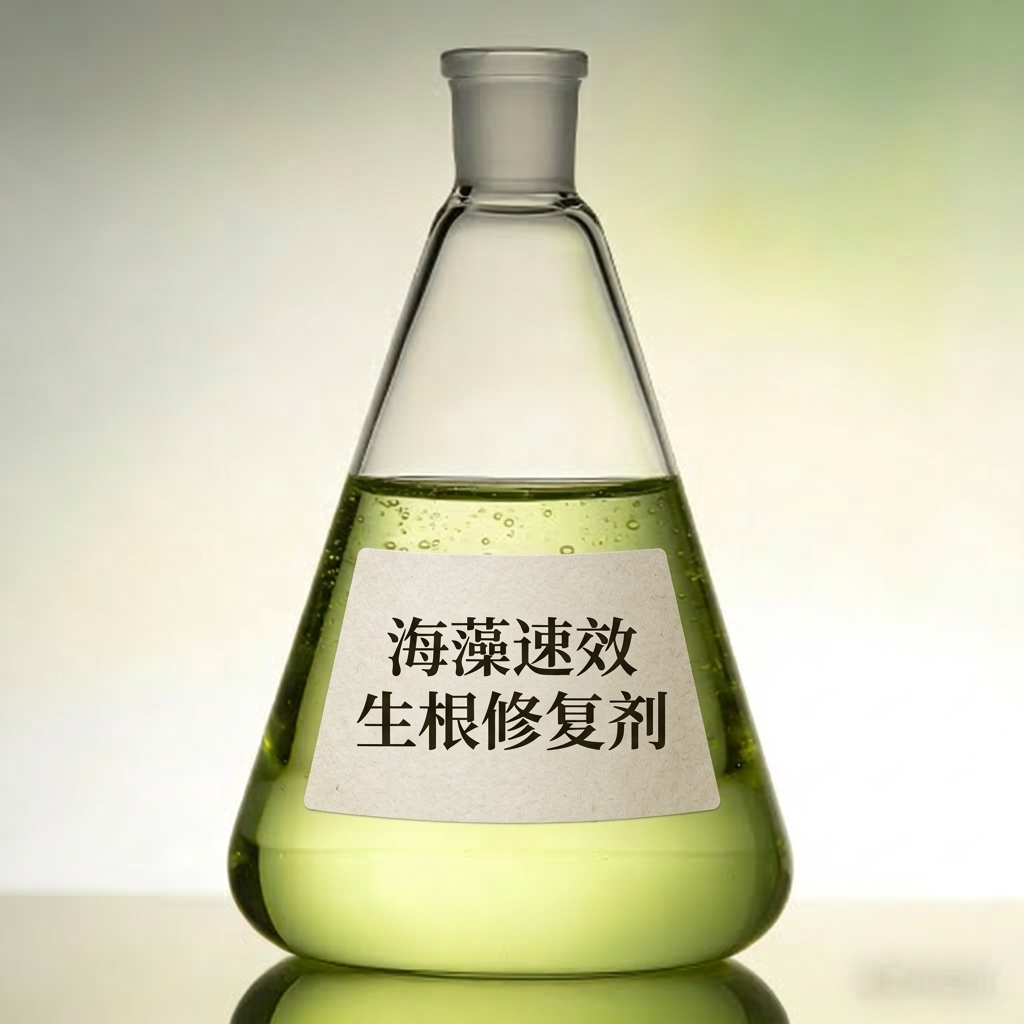
Seaweed Rapid Rooting Stimulator is a high-efficiency fertilizer product specifically developed to promote crop rooting and root system repair. Utilizing sugar alcohol chelation technology, it contains abundant chelated secondary elements, chelated trace elements, and nitrogen nutrition. This product can be widely used in cutting, transplanting, and planting stages, effectively promoting rooting, shortening recovery time, and repairing damaged root systems.
Core Benefits
Promote Cutting Rooting
Dip or soak roots to promote rapid rooting of cuttings and improve cutting survival rate.
Shorten the transplanting and recovery period
Apply immediately after crop transplanting to promote rapid root recovery and shorten seedling recovery time.
Repair damaged root systems
Repair root damage caused by transplanting, disease, environmental stress, etc., and restore root vitality.
Prevent Premature Plant Senescence
Application during late growth stages effectively prevents premature senescence and extends the harvest period.
Core Advantages
- Sugar Alcohol Chelation ProcessMedium and trace elements exist in a sugar alcohol chelated form, offering good stability and high absorption rate.
- High Sugar Alcohol ContentSugar alcohol content ≥140g/L; sugar alcohols themselves are plant-available organic nutrients.
- Multiple Application MethodsSuitable for drenching, sprinkler irrigation, drip irrigation, subsurface drip irrigation, as well as root dipping and soaking.
- Fast-Acting RootingFor root dipping, dilute 50 times and quickly dip for 2-5 seconds for immediate effect.
- Applicable throughout the entire growth periodCan be used multiple times throughout the crop's growth period.
- Prevent Premature AgingLate-stage application effectively prevents premature plant senescence.
Applicable Scenarios
Application Reference
Fertigation, drip irrigation (recommended)
Promotes root growth and repairs damaged root systems after crop transplantation.
- Dilution Ratio: 500 — 1500 times
- Application rate: 2.0 — 5.0 kg/mu per application.
- Application Interval: Every 7 — 10 days
- Recommendation: Best results when applied immediately after crop establishment.
Root dipping (fast)
Suitable for quick treatment during cutting or transplanting, saving time.
- Dilution Ratio: 50 Times
- Treatment Method: Quick dip of plant roots
- Soaking Time: 2 — 5 seconds
- Advantages: Easy to Use, Fast Results
Root Soaking (Deep Treatment)
Suitable for transplanted plants requiring deeper treatment.
- Dilution Ratio: 500 — 800 times
- Treatment Method: Soak the roots of transplanted plants
- Soaking Time: 0.5 — 1 hour
- Advantage: More thorough rooting effect
Sprinkler irrigation/Sub-membrane drip irrigation
Suitable for large-scale fertilization operations in facility agriculture.
- Dilution Ratio: 500 — 1500 times
- Application rate: 2.0 — 5.0 kg/mu per application.
- Application Interval: Every 7 — 10 days
- Advantages: Even Fertilization, Saves Time and Effort
Scope of Application
| Crop Type | Representative Crops | Recommended Application Period |
|---|---|---|
| Fruit Category | Grapes, Citrus, Apples, Pears, Peaches | Transplanting and Cutting Propagation Period |
| Vegetables | Tomatoes, Cucumbers, Peppers, Eggplants, Leafy Vegetables | Seedling Transplanting and Post-Transplant Recovery Period |
| Garden Flowers | Flowers, Seedlings, Lawns | Cutting Propagation, Transplanting, Maintenance Period |
| Other Crops | Tea, Chinese medicinal herbs, cotton, etc. | Transplanting and Root Damage Recovery Period |
- Can be applied multiple times throughout the crop's growth cycle for enhanced results.
- Best applied immediately after crop transplanting.
- Application in the late growth stage can effectively prevent premature plant senescence.
- During cutting or transplanting, dipping or soaking roots significantly promotes rooting.
- Store in a cool, dry place away from direct sunlight.
- It can be mixed with most fertilizers and pesticides, but a small-scale trial is recommended prior to use.
FAQ
Root dipping and soaking are two different treatment methods.
- Root dipping (fast)Dilute 50 times, quickly dip plant roots for 2-5 seconds. Simple operation, suitable for large-scale transplanting or time-sensitive situations.
- Root Soaking (Deep Treatment)Dilute 500-800 times, soak plant roots for 0.5-1 hour. More thorough rooting effect, suitable for precious seedlings or situations requiring stronger rooting.
Selection advice: For large-scale transplanting, choose root dipping for quick processing; for precious seedlings or hard-to-root varieties, root soaking is recommended.
Select the optimal timing based on the intended use:
- Cutting PropagationTreat cuttings by root dipping or soaking before propagation.
- Transplanting and PlantingApply via fertigation or drip irrigation immediately after transplanting; combining with root dipping/soaking yields better results.
- Root System DamageApply as soon as possible after discovering root damage, and use continuously for 2-3 applications.
- Prevent Premature AgingFertigation or drip irrigation in the late growth stage can effectively prevent premature plant senescence.
Recommendation: Multiple applications throughout the entire growth cycle yield better results.
Sugar alcohol chelation technology offers the following advantages over conventional processes:
- High StabilitySugar alcohols form stable chelates with medium and trace nutrients, reducing soil fixation.
- High Absorption RateSugar alcohol itself is an organic substance that plants can directly absorb and utilize, capable of carrying nutrient elements into cells quickly.
- Bidirectional ConductionSugar alcohol chelated nutrients can be transported bidirectionally through xylem and phloem, enabling more efficient nutrient utilization.
- Strong Stress ResistanceEnhances crop resistance to stresses such as drought, low temperature, and salinity.
Store in the original sealed packaging in a cool, dry, and well-ventilated place. Shelf life:24 MonthsStorage Precautions:
- Store in a cool, dry place away from direct sunlight.
- Avoid contact with sharp objects to prevent packaging damage.
- Avoid storage with strong oxidizers, strong acids, or strong bases.
Use promptly after opening; reseal and store any unused product.
This product has been exported to multiple regions including Southeast Asia, the Middle East, and Europe. Available export documents include:
- Commercial Invoice
- Packing List
- Certificate of Origin (CO)
- Phytosanitary Certificate
- SDS/MSDS (Multilingual Versions)
- Certificate of Analysis (COA)
Send Inquiry
Please fill in the information below, and our business team willWithin 2 working daysReply to you.
Products in the Same Series
More seaweed-based nutrition products to meet the growth needs of different crops.