中文
中文 English
 Русский
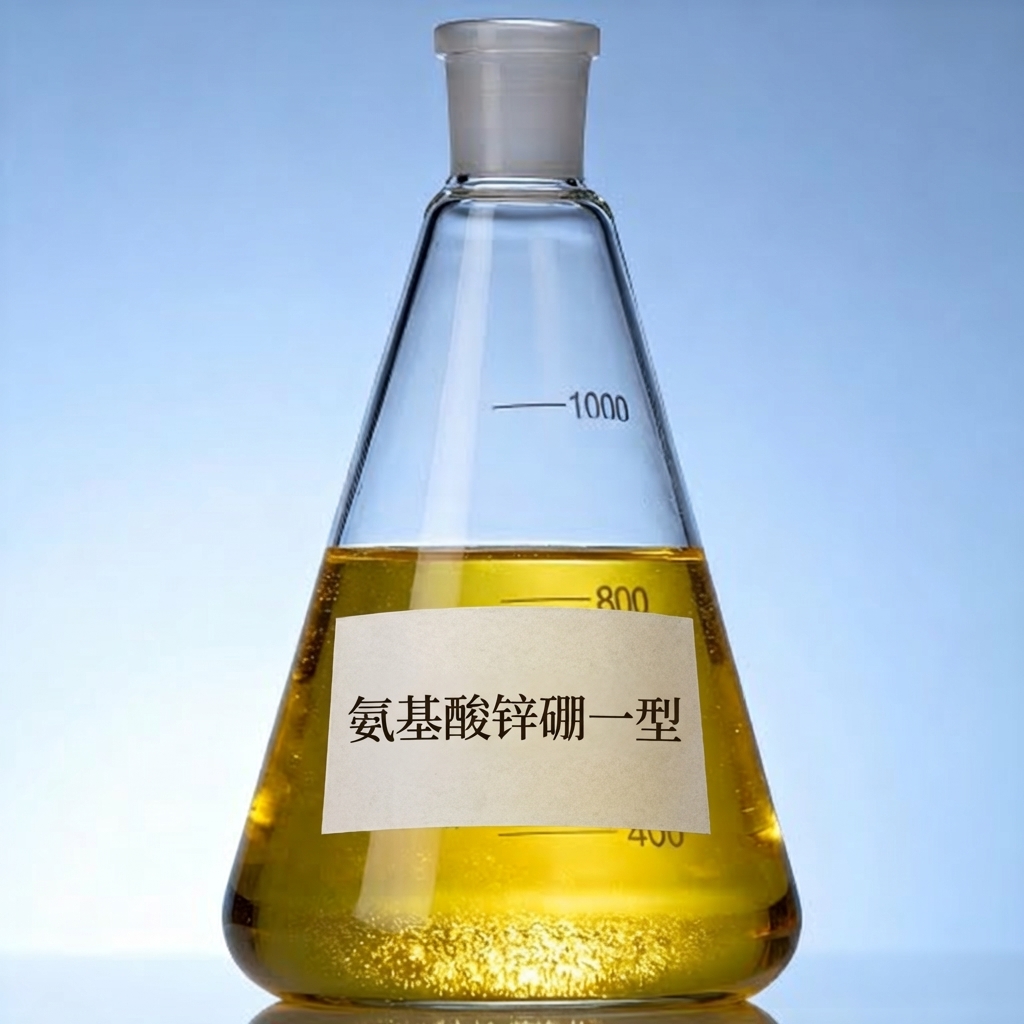
Technical Specifications
Chemical and physical indicators (agricultural grade)
| Serial Number | Parameter Name | Specification Requirements |
|---|---|---|
| 1 | Amino Acids (Total Amino Acid) | ≥ 100 g/L |
| 2 | Zinc + Boron (Zn+B) | ≥ 20 g/L |
| 3 | Appearance | Acidic light yellow liquid |
| 4 | Specific Gravity | 1.23 — 1.25 |
| 5 | pH value | 3.0 — 3.5 |
| 6 | Water Insoluble Matter | ≤ 0.5% |
Physical Properties
| Project | Description |
|---|---|
| Appearance | Acidic light yellow liquid, uniform color |
| Odor | Slight natural amino acid odor |
| Water Solubility | Fully water-soluble, dissolves quickly, no sediment |
| Specific gravity | 1.23 — 1.25 |
| pH value | 0 — 3.5, acidic |
| Key Benefits | Supplement Zinc and Boron to enhance fruit coloring |
Product Overview
Product Overview
Amino Acid Zn-B Type I is a high-efficiency liquid fertilizer designed to promote fruit coloring. It is an acidic light yellow liquid with AA≥100g/L, Zn+B≥20g/L, specific gravity 1.23-1.25, pH 3.0-3.5. By supplementing zinc and boron with amino acid carriers, it effectively enhances uniform fruit coloring and improves fruit quality and market value.
Core advantages
- Zinc-Boron SupplementationZn+B≥20g/L, one application simultaneously supplies two key trace elements: zinc and boron
- High-Content Amino AcidsAA≥100g/L, rich amino acid carriers rapidly transport zinc and boron ions into cells
- Promotes coloringZinc is involved in chlorophyll synthesis and photosynthesis; boron promotes sugar transport and anthocyanin synthesis.
- Quality ImprovementPromotes anthocyanin accumulation, resulting in brighter fruit color and higher commercial value.
- Fully Water SolubleAcidic light yellow liquid, dissolves quickly, no sediment, suitable for various spraying and drip irrigation systems
- Acidic formulapH 3.0-3.5, compatible with most foliar fertilizers
Zinc-boron synergistic mechanism
| Element | Main Functions | Coloring stage function |
|---|---|---|
| Zinc (Zn) | Participates in chlorophyll synthesis, promotes photosynthesis | Enhances sugar accumulation and provides energy for pigment synthesis |
| Boron (B) | Promotes sugar transport, regulates cell wall structure | Accelerates sugar transport to fruit and promotes anthocyanin synthesis |
| Zinc-Boron Synergy | Synergistic effect, improves absorption and utilization | Even coloring, vibrant color |
Application Scenarios
Application Reference
Foliar spray (recommended)
Quickly supplements zinc and boron trace elements, directly absorbed through foliar application, especially suitable for use during the fruit coloring period.
- Dilution Ratio: 1:800 — 1:1500
- Application rate: 30 — 60 L/ha
- Frequency: every 7 — 10 days
- Time: Best applied in the morning or evening, avoiding high-temperature periods
Drip Irrigation
Fully water-soluble formula, suitable for facility agriculture and precision fertilization. Zinc and boron exist in amino acid chelated form, allowing direct absorption by crops.
- Concentration: 0.5 — 1 g/L irrigation water
- Application rate: 3 — 5 kg/mu/time
- Frequency: every 10 — 15 days
- Note: Can be used in combination with water-soluble NPK fertilizers
Foliar Drench
Apply via fertigation during irrigation, suitable for supplementing zinc and boron during the coloring period of fruit trees, vegetables, and other cash crops.
- Dosage: 5 — 8 kg/mu/time
- Dilution Ratio: 1:100 — 1:200
- Timing: Apply at the start of the coloring stage
- Note: Small amounts applied frequently yield better results
Water-soluble fertilizer compounding
Use as a source of trace elements in combination with water-soluble macronutrient fertilizers to achieve balanced nutrition.
- Use with water-soluble NPK fertilizer
- Mixing ratio: 3–5%
- Suitable for melons, vegetables, and fruit trees
- Significant results after 2-3 consecutive applications during coloring period
Target Crops & Recommended Dosage
| Crop Type | Representative Crops | Foliar Spray Dosage | Drip Irrigation Dosage | Application Period |
|---|---|---|---|---|
| Fruit trees | Apples, pears, peaches, grapes, citrus, cherries | 800–1500x dilution | 3 — 5 kg/mu | Early color change, peak coloring period |
| Vegetables | Tomato, pepper, eggplant, bell pepper | 800 — 1200 times | 2–4 kg/mu | Fruit expansion period, color change period |
| Melons and fruits | Watermelon, melon, strawberry, mango | 800 — 1200 times | 2–4 kg/mu | Fruit expansion & ripening stage |
| Berries | Blueberries, Raspberries, Blackberries | 1000 — 1500 times | 2 — 3 kg/mu | Start using at the beginning of the coloring period |
| Tropical Fruits | Lychee, Longan, Dragon Fruit | 800 — 1200 times | 3 — 5 kg/mu | Late fruit development and coloring stage |
- Store in a cool, dry place away from direct sunlight; use promptly after opening to ensure effectiveness.
- Both zinc and boron are trace elements; dosage should be controlled to avoid over-application and potential toxicity.
- Can be mixed with most neutral or acidic fertilizers, but a small-area test is recommended before use.
- For foliar application, spray in the early morning or late evening, avoiding high temperatures and direct sunlight.
- For best results, apply 2-3 times during the coloring period, with 7-10 days between applications.
FAQ
The coloring period is a critical stage for fruit quality formation, and zinc and boron play irreplaceable roles in the coloring process.
- Zinc (Zn)Participates in chlorophyll synthesis and photosynthesis, promoting sugar accumulation and providing an energy foundation for fruit coloring.
- Boron (B)Promotes sugar transport and synthesis of anthocyanin precursors, accelerating pigment formation.
- Synergistic effectCombined zinc and boron supplementation significantly improves photosynthetic efficiency and sugar accumulation, promoting rapid anthocyanin synthesis
Adequate zinc and boron supply during the coloring period makes fruit colors more vibrant and uniform, significantly increasing commercial value.
The main differences lie in nutrient form and absorption efficiency:
- Regular zinc-boron fertilizerExisting in inorganic salt form (e.g., zinc sulfate, borax), ionic zinc and boron are easily fixed by soil, resulting in lower absorption rate
- Amino Acid Zinc Boron LiquidZinc and boron exist in amino acid chelated form, carried into cells by amino acid molecules, allowing direct absorption by crops with higher uptake rate
Additionally, amino acids are organic nutrients directly usable by crops, enhancing stress resistance and fruit quality.
Best results recommended when applied during fruit coloring period:
- Early Coloring StageApply when fruit begins to show color change to promote early pigment accumulation
- Peak Coloring PeriodUse during the rapid coloring stage of fruit to improve color uniformity and brightness.
- Maturity StageEnhances fruit color and increases commercial value
Recommended to use 2-3 times consecutively at 7-10 day intervals for best results.
Store in original sealed packaging in a cool, dry, and well-ventilated location. Shelf life is24 MonthsStorage precautions:
- Avoid direct sunlight and high temperatures; recommended storage temperature 5-35°C
- Prevent freezing, avoid drastic temperature changes
- Avoid mixing with strong oxidizers or corrosive substances
Use promptly after opening; reseal any unused product for storage.
Although zinc and boron are micronutrients, excessive application can also adversely affect crops:
- Zinc excessYellowing and chlorotic spots on leaves; severe cases lead to leaf necrosis and affect photosynthesis.
- Boron ExcessLeaf margins show scorching symptoms; in severe cases, may cause leaf and fruit drop
Therefore, strictly follow the recommended dosage when using. This product has Zn+B≥20g/L, and the dilution ratio should be controlled at 800-1500 times or more.
Send Inquiry
Please fill in the information below, and our business team willWithin 2 working daysReply to you.
Same Series Products
More amino acid color-enhancing and sweetness products for various crop needs