中文
中文 English
 Russian
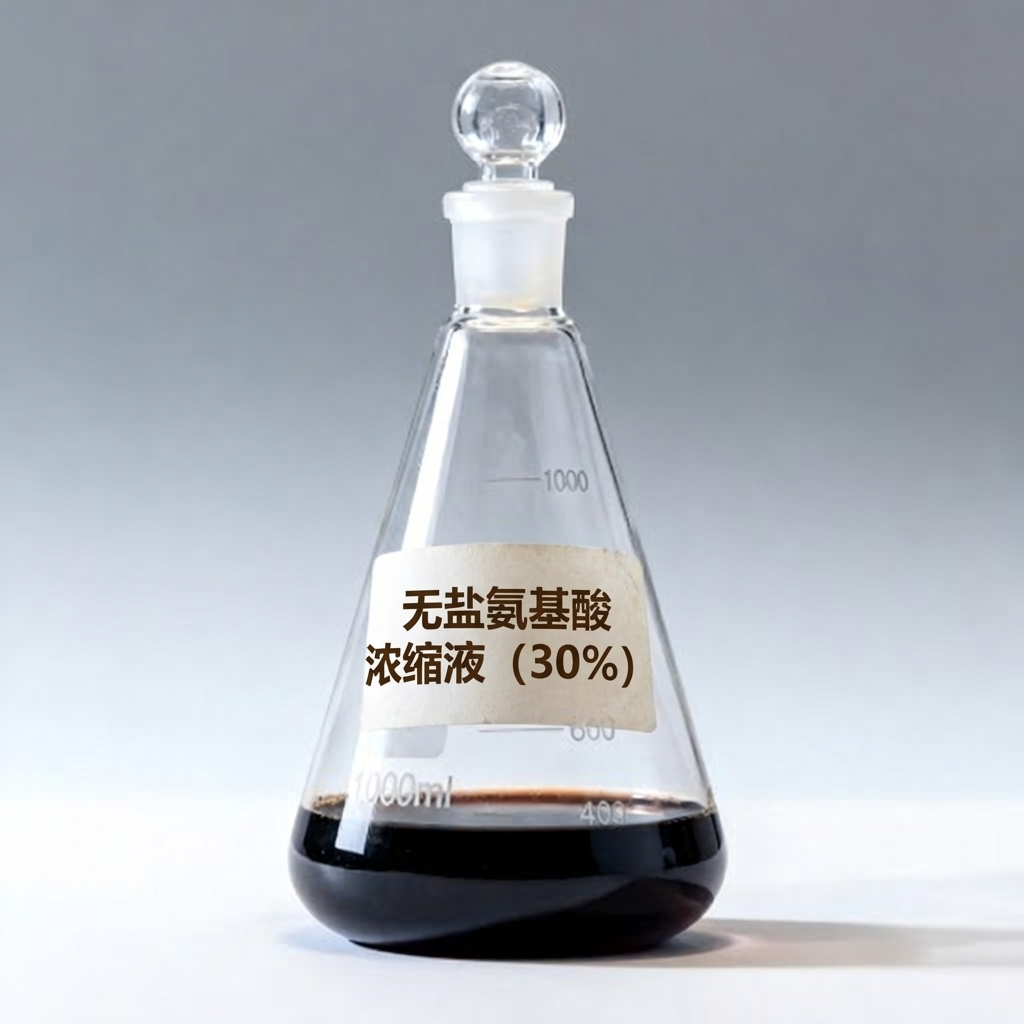
Technical specifications
Chemical and Physical Specifications (Agricultural Grade)
| Serial Number | Indicator name | Specification Requirements |
|---|---|---|
| 1 | Free Amino Acids | ≥ 300 g/L |
| 2 | Appearance | Dark brown liquid |
| 3 | Specific Gravity | 1.15 — 1.17 |
| 4 | pH value (1:10 dilution) | 3 — 5 |
| 5 | Chloride Ion (Cl⁻) | 0.5 — 1% |
| 6 | Water solubility | Fully water-soluble |
Physical Properties
| Project | Description |
|---|---|
| Appearance | Dark brown liquid, uniform color |
| Odor | Mild characteristic amino acid odor |
| Water soluble | Fully water-soluble, dissolves rapidly. |
| Specific Gravity | 1.15 — 1.17 |
| pH value | 3–5, Acidic Reaction |
| Chloride ion content | 5–1%, low-chlorine formula |
Product description
Product overview
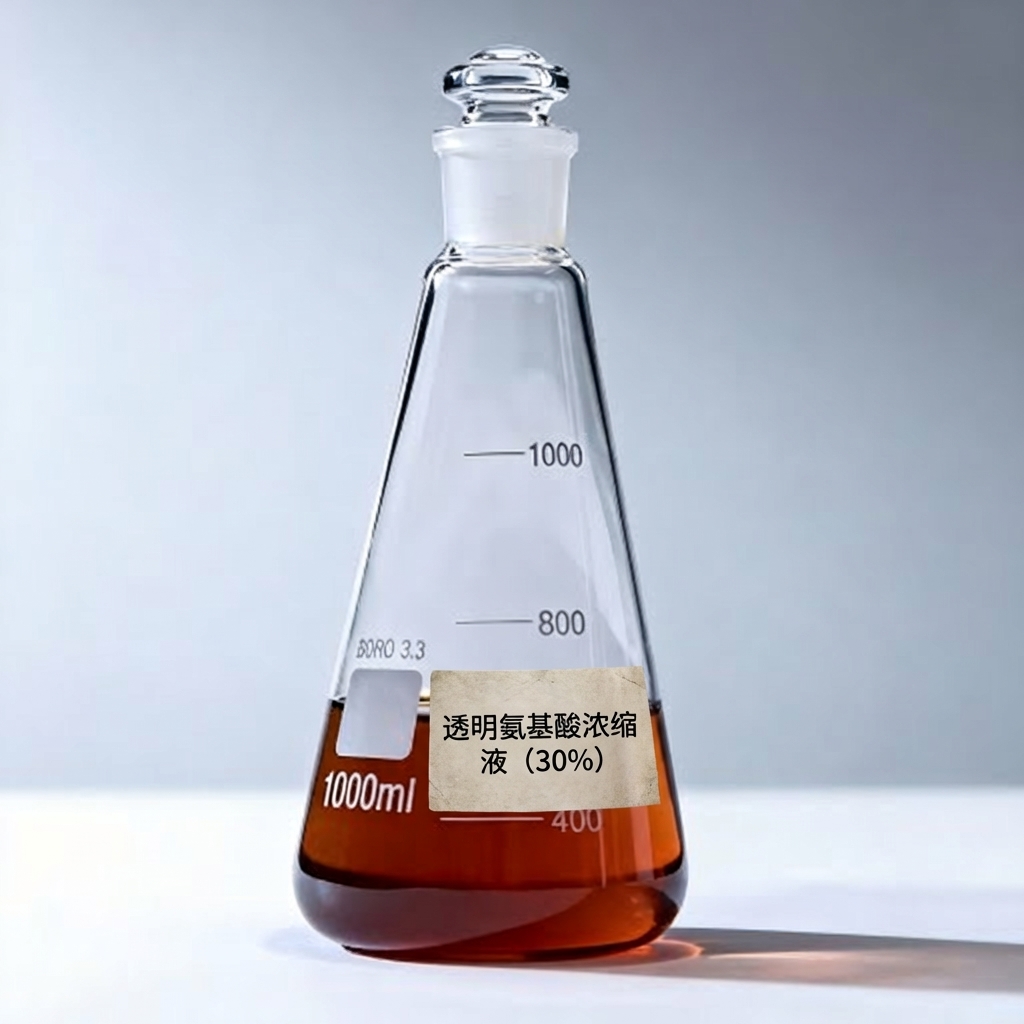
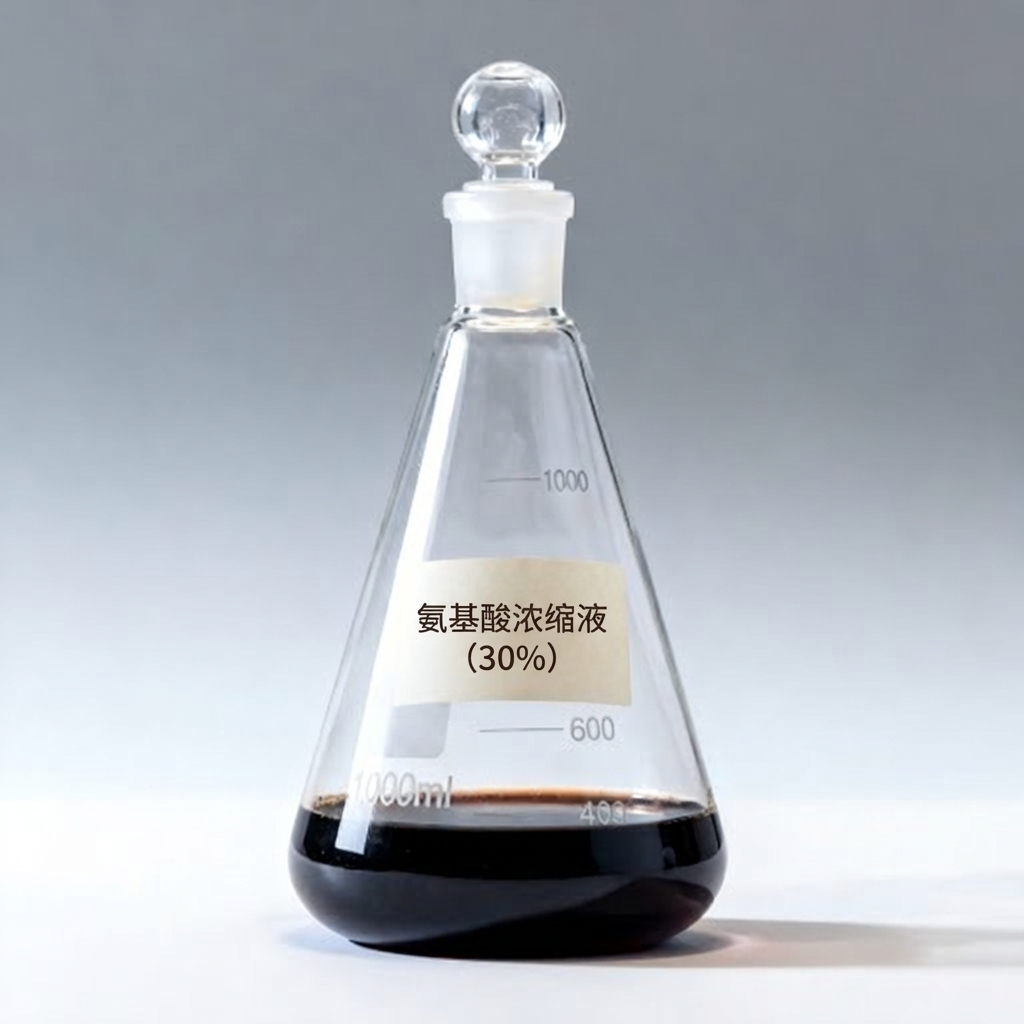
Salt-free amino acid concentrate (30%) is a highly concentrated liquid amino acid fertilizer with low chlorine content. The product is a dark brown liquid with free amino acids ≥300 g/L, density 1.15-1.17, and chlorine ion content only 0.5-1%. The low-chlorine formula is especially suitable for chlorine-sensitive crops (e.g., potato, tobacco, grape, berries) and for formulating high-quality water-soluble fertilizers.
Key Advantages
- Low-chloride formulaChloride ion content only 0.5-1%, suitable for chlorine-sensitive crops.
- High ConcentrationFree amino acids ≥300 g/L, high active ingredient content
- Fully water-solubleGood solubility, no sediment or residue
- Wide ApplicationSuitable for formulating fertilizers for chlorine-sensitive crops and water-soluble fertilizers.
- High degree of absorptionAmino acids can be directly absorbed and utilized by plants, quickly replenishing nutrients.
- Quality ImprovementImproves product quality and flavor, reduces chloride ion accumulation.
Comparison of Product Advantages
| Characteristics | Description | Area of application |
|---|---|---|
| Low-chloride formula | Chloride ion content is only 0.5-1%, significantly lower than in conventional amino acid solutions. | Preferred for chlorine-sensitive crops; formulation for high-quality water-soluble fertilizers. |
| High Concentration | Free amino acids ≥300 g/L, high active ingredient concentration | Reduces transportation and operating costs. |
| Fully water-soluble | Dissolves quickly, no sediment or residue. | Application: drip irrigation, foliar spray, fertigation |
| Acidity | pH 3-5, acidic reaction. | Compatible with acid fertilizers |
Area of application
Application recommendations
For chlorine-sensitive crops (recommended)
Low-chlorine formula is especially suitable for chlorine-sensitive crops, preventing chloride ion accumulation and its impact on quality.
- Drip Irrigation: 3-8 L/μ/Application
- Foliar application: dilute 500–1000 times.
- Suitable for crops: potato, tobacco, grape, berries, vegetables, fruits, etc.
- Effect: improves quality, reduces chloride ion accumulation
Mixed fertilizers (primary use)
As raw material for the production of high-quality water-soluble and foliar fertilizers, low-chlorine formula suitable for various premium products.
- Addition ratio: 5–20%
- Suitable for mixing with water-soluble fertilizers containing macronutrients, mesonutrients, and micronutrients.
- Compatible with most fertilizers.
- Attention: Conduct a compatibility test before use.
Application by drip irrigation
Fully water-soluble formula, especially suitable for protected cultivation and precision agriculture.
- Dilution Ratio: 100–300.
- Application rate: 3—10 L/mu/application
- Frequency: every 7–15 days
- Note: Can be used together with water-soluble macronutrient fertilizers.
Foliar Feeding
Rapidly replenishes amino acid nutrition, enhances plant stress resistance.
- Dilution ratio: 500 – 1000 times
- Application rate: 30–60 L/ha.
- Time: morning or evening, avoiding high temperature
- Note: Can be used together with most foliar fertilizers.
Recommended for chlorine-sensitive crops
| Crop Type | Typical crops | Drip irrigation rate | Application rate for foliar feeding | Application period |
|---|---|---|---|---|
| Tuber Crops | Potatoes, sweet potatoes, beets | 3–6 L/ha | 500–800 times | Tuber initiation and bulking period |
| Tobacco crops | Tobacco, tea | 3–6 L/ha | 500–800 times | Multiple applications during the growing season |
| Berry Crops | Grapes, strawberries, blueberries, raspberries. | 4–8 L/ha | 500–1000 times | Germination, flowering, fruit development stages |
| Fruit Trees | Citrus, apples, pears | 5 – 10 L/mu | 500–800 times | Fruit set and fruit filling period |
| Vegetables | Tomato, cucumber, pepper | 3–6 L/ha | 500–1000 times | Seedling stage, flowering stage, fruiting stage |
- Store in a cool, dry place away from direct sunlight. At low temperatures, slight crystallization may occur, which does not affect efficacy after dissolution by heating.
- Low chlorine formula, suitable for chlorine-sensitive crops, prevents excessive accumulation of chloride ions.
- Compatible with most fertilizers and pesticides; however, it is recommended to perform a compatibility test on a small area before large-scale application.
- For foliar application, it is recommended to first conduct a small-area test to ensure no phytotoxicity, then apply on a large scale.
- Before drip irrigation, it is recommended to filter the solution to prevent clogging of drippers.
Frequently asked questions
The main difference lies in the content of chloride ions:
- Salt-free amino acidsChloride ion content is only 0.5-1%, significantly lower than that of common liquid amino acid products (usually 3-5% or higher).
- Broader spectrum of applicationSuitable for chlorine-sensitive crops such as potatoes, tobacco, grapes, berries, etc.
- High qualityReduces accumulation of chloride ions in plants and soil, improves crop quality.
- Premium CompositionsEspecially suitable for formulating high-quality water-soluble fertilizers and foliar sprays.
Chlorine-sensitive crops include:
- Tuber CropsPotatoes, sweet potatoes, sugar beets, carrots
- Tobacco cropsTobacco, Tea (Affects Taste Quality)
- Berry CropsGrapes, strawberries, blueberries, raspberries, cranberries.
- Fruit TreesCitrus (affects sugar accumulation), peach, plum, apricot
- LegumesSoybeans, Beans, Peas
- Some leafy vegetablesLettuce, spinach (to reduce nitrate accumulation).
Yes, but the dilution ratio must be followed:
- Foliar FeedingRecommended to dilute 500-1000 times and evenly spray on both leaf surfaces.
- Drip irrigation and fertigationRecommended dilution 100–300 times.
- Combined Raw MaterialsWhen used as raw material for water-soluble and foliar fertilizers, the recommended application rate is 5-20%.
It is recommended to use together with other fertilizers for better effect.
Store in original packaging, sealed, in a cool, dry, well-ventilated place. Shelf Life:12 monthsStorage Precautions:
- Avoid direct sunlight and high temperatures
- Protect from freezing in winter, avoid crystallization.
- Avoid storage with strong oxidizers, acids and alkalis.
Use as soon as possible after opening; store unused product in a sealed container.
This product is exported to regions including Southeast Asia, the Middle East, Europe, and others; the provided export documents include:
- Commercial Invoice
- Packing List
- Certificate of Origin (CO)
- Phytosanitary Certificate
- SDS/MSDS (multilingual version).
- Certificate of Analysis (COA)
Send Inquiry
Please fill in the following information, our commercial team will contact youWithin 2 working daysReply to you.
Products of the same series
More liquid amino acid product options to meet various application needs