中文
中文 English
 Russian
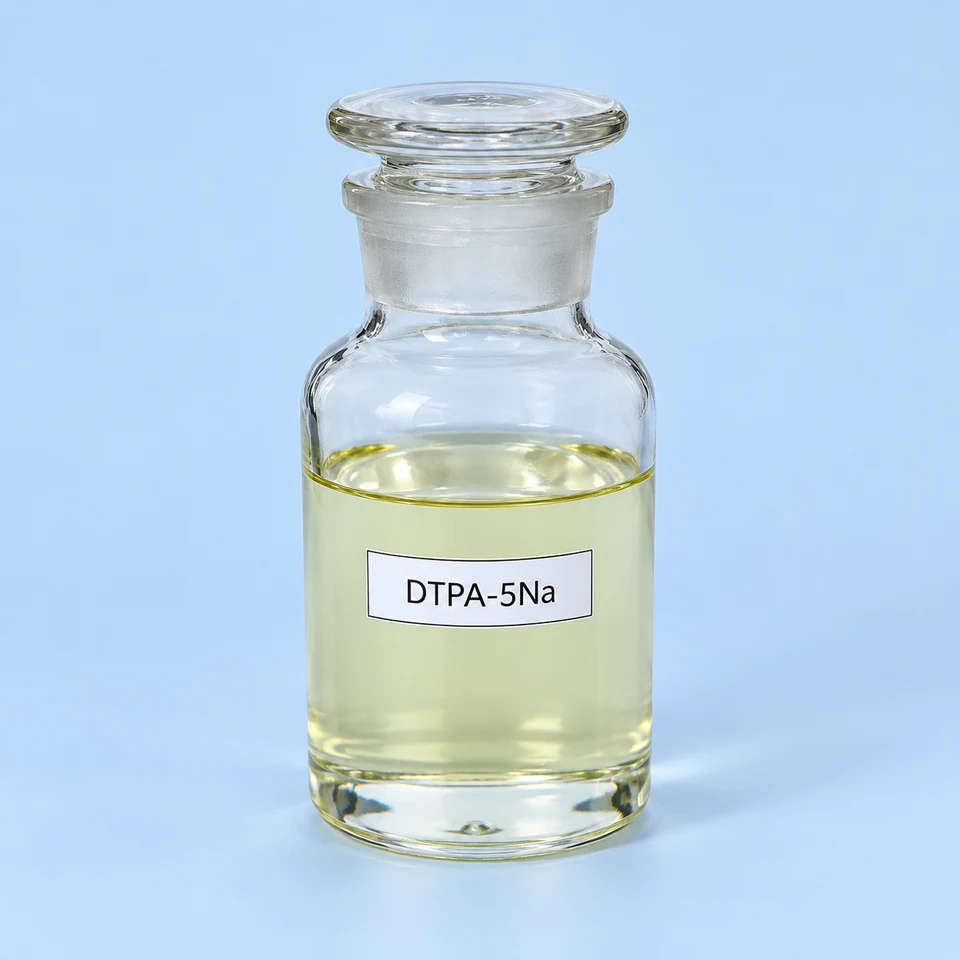
Technical specifications
DTPA-5Na 40% specification
| Test parameters | Standard |
|---|---|
| Content | ≥ 40.00% |
| Specific gravity (g/mL, 25°C) | 1.25 — 1.35 |
| pH (1% solution) | 11.0 — 12.5 |
| Chelating Value (mg CaCO₃/g) | ≥ 80 |
| Appearance | Transparent liquid, yellow or light yellow |
DTPK-5Na 50% specification
| Test parameters | Standard |
|---|---|
| Content | ≥ 50.00% |
| Specific gravity (g/mL, 25°C) | 1.30 — 1.40 |
| pH (1% solution) | 11.0 — 12.5 |
| Chelating Value (mg CaCO₃/g) | ≥ 99 |
| Appearance | Transparent liquid, yellow or light yellow |
Physical Properties
| Item | Description |
|---|---|
| Appearance | Transparent liquid, yellow or light yellow |
| Chemical Formula | C₁₄H₁₈N₃O₁₀·5Na |
| Molecular weight | 503.25 |
| CAS Number | 140-01-2 |
Additional specifications and supply
| Parameter | Details |
|---|---|
| Chloride (Cl⁻) | ≤ 0.005% |
| Sulfate (SO₄²⁻) | ≤ 0.005% |
| Lead (Pb) | ≤ 0.0005% |
| Packaging material | Plastic drums or IBC containers |
Product description
Product overview
Diethylenetriaminepentaacetic acid pentasodium salt solution (DTPA-5Na) is a highly effective organic chelating agent solution, CAS 140-01-2, formula C₁₄H₁₈N₃O₁₀·5Na, molecular weight 503.25. The product is a transparent yellow or light yellow liquid, available40% and 50%Two concentrations. Maintains stability and efficacy under oxidative conditions, especially suitable for industrial applications requiring a stronger chelating agent.
Key Advantages
- Available in two specification optionsAvailable in two concentrations: 40% and 50% to meet various processing needs.
- High Chelating CapacityChelating capacity for 40% concentration is ≥80 mg CaCO₃/g, for 50% concentration is ≥99 mg CaCO₃/g.
- Oxidative stabilityRemains stable under oxidative conditions, suitable for peroxide bleaching processes.
- Wide ApplicationPulp and paper industry, textile manufacturing, oilfield deposit cleaning, and other industrial fields.
Application recommendations
Recommendations for industrial application
Pulp and paper industry — peroxide bleaching
- Recommended concentration: 0.5%–2.0% (based on dry weight of cellulose)
- Directions for Use: use together with peroxide, add at the bleaching stage.
- Effect: enhances bleaching efficiency and reduces catalytic decomposition of bleach by metal ions.
Textile printing and dyeing
- Recommended concentration: 0.1%–0.5% (bath ratio 1:10–1:20)
- Directions for Use: pretreatment before dyeing or use in the same bath with the dye.
- Effect: chelates metal ions in water, enhancing color uniformity and colorfastness.
Descaling in oil wells
- Recommended concentration: 0.5%–3.0% (based on system water volume)
- Directions for Use: use in circulation flushing or in acid descaling processes.
- Effect: effectively dissolves and prevents scale deposits such as calcium carbonate and calcium sulfate.
Important Notes:Specific dosage and application method may be adjusted according to actual process conditions. It is recommended to conduct trial tests before large-scale application. For technical consultation, please contact our sales engineer.
Frequently asked questions
Main differences between the two specifications and selection recommendations:
- Differences in concentrationThe active ingredient content at 50% concentration is 25% higher than at 40% concentration, chelating capacity increases from ≥80 to ≥99 mg CaCO₃/g.
- Density DifferenceSpecific gravity: 1.25–1.35 g/mL for 40% concentration, 1.30–1.40 g/mL for 50% concentration.
- Selection recommendationsFor scenarios with high concentration requirements (e.g., removing deposits in oil wells), choose a 50% concentration; for ordinary pulp bleaching and textile printing and dyeing, 40% concentration is sufficient.
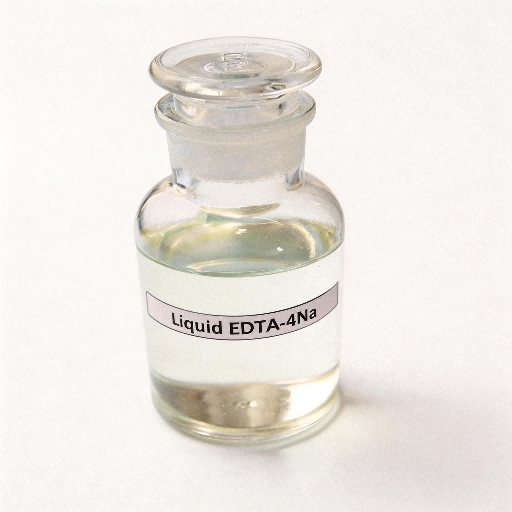
Key differences between DTPA-5Na and EDTA-4Na:
- Chelating GroupDTPA has 5 coordination atoms (nitrogen, oxygen), EDTA has 4; DTPA's chelating ability is higher.
- Oxidative stabilityDTPA is more stable under peroxide bleaching conditions and less prone to oxidative degradation.
- Area of applicationDTPA is more suitable for oxidizing environments such as pulp bleaching and oil well scale removal; EDTA is more suitable for general metal ion chelation.
Storage Requirements:
- Store in tightly closed container in a dry place
- Recommended storage in PVC, PE, stainless steel, or asphalt-lined containers.
- Shelf Life 24 months (in original unopened packaging, tightly sealed)
Incompatible substances:Strong oxidizers, aluminum, copper, copper alloys, nickel, and zinc
Packaging specification:
- Standard packaging250 kg/drum or 1250 kg/IBC tote
- Individual packagingOther packaging sizes available upon customer request
Please confirm the minimum order quantity with our sales team; we will propose the optimal solution based on your needs.
Send Inquiry
Please fill in the following information, our commercial team will contact youWithin 2 working daysWe will reply to you.