中文
中文 English
 Russian
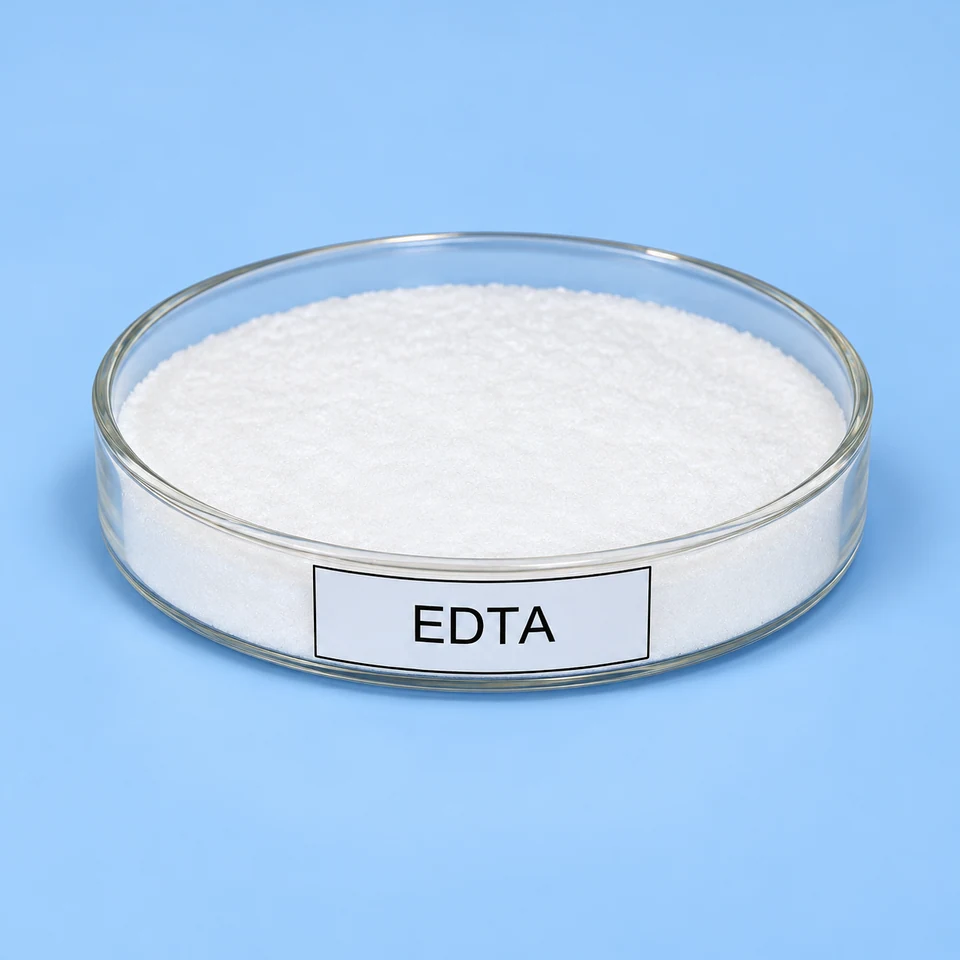
Technical specifications
Control Parameters
| Number | Verifiable parameters | Standard |
|---|---|---|
| 1 | Content | 99.00% Min. |
| 2 | Chloride (Cl⁻) | 0.01% Max. |
| 3 | Sulfates (SO₄²⁻) | 0.05% Max. |
| 4 | Heavy Metals (Pb) | 0.001% Max. |
| 5 | Iron (Fe) | 0.001% Max. |
| 6 | Chelation Value | 339 Min. (mgCaCO₃/g) |
| 7 | pH (50 g/L, 25 °C) | 2.8 — 3.0 |
| 8 | Appearance | White Crystalline Powder |
Physical and chemical properties
| Item | Description |
|---|---|
| Appearance | White Crystalline Powder |
| CAS No. | 60-00-4 |
| Melting Point | 240℃ (decomposition) |
| Water Solubility | Insoluble in cold water, alcohols, and common organic solvents; slightly soluble in hot water; soluble in sodium hydroxide, sodium carbonate, and ammonia solutions. |
| Chemical Formula | C₁₀H₁₆N₂O₈ |
| Molecular weight | 292.24 g/mol |
Additional specifications and supply
| Parameter | Details |
|---|---|
| Personal care grade assay | ≥ 99.5% |
| Loss on drying | ≤ 0.2% |
| Packaging material | 25 kg kraft paper bags |
Product description
Product overview
Ethylenediaminetetraacetic acid (EDTA) is an important organic compound belonging to the class of aminopolycarboxylic chelating agents. The product is a white crystalline powder with purity ≥99%, melting point 240°C (decomposition). Insoluble in cold water, alcohols, and common organic solvents; slightly soluble in hot water; soluble in sodium hydroxide, sodium carbonate, and ammonia solutions.
Key Features
- High purityContent ≥99%, low impurity content, stable and reliable quality
- High Chelating CapacityChelation value 339 mg CaCO₃/g, capable of forming stable complexes with various metal ions.
- Wide ApplicationSuitable for water treatment, cleaning agents, chemical processing, pulp and paper, textile, and other industries.
- Good StabilityChemically stable, convenient for storage and transportation
Usage guide
Dissolution Method
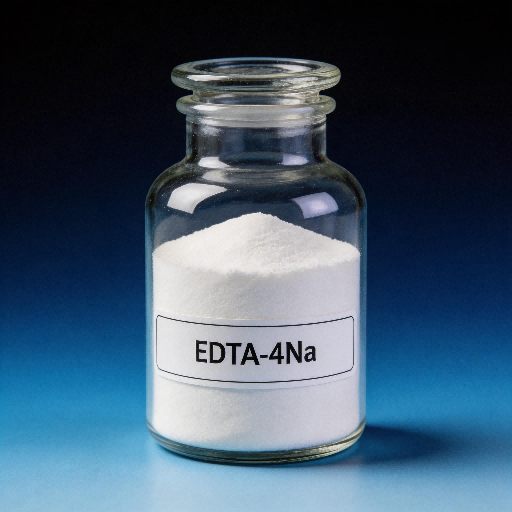
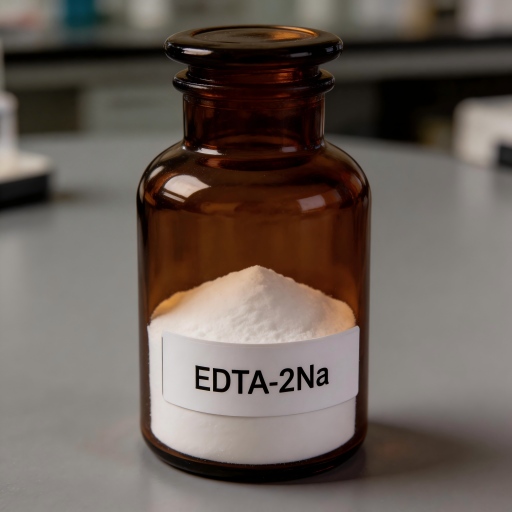
EDTA is insoluble in cold water but soluble in solutions of sodium hydroxide, sodium carbonate, and ammonia. Typically, EDTA is first mixed with an appropriate amount of alkali (e.g., sodium hydroxide) to produce an EDTA salt (e.g., EDTA-2Na or EDTA-4Na), which is then used because it dissolves more easily in water.
Typical application ratios
| Area of application | Recommended dosage | Note |
|---|---|---|
| Water Treatment | 10-100 mg/L | Dosage adjusted depending on water hardness |
| Cleaning agents | 0.5-5% | Used in combination with surfactants |
| Textile printing and dyeing | 0.5-2 g/L | Removal of metal ions, improvement of coloring effect |
Application recommendations
- Before use, it must be neutralized with an alkaline substance (e.g., sodium hydroxide) to obtain a water-soluble salt.
- Heating accelerates dissolution; it is recommended to work in hot water at 60-80°C.
- Adjust dosage according to specific application and water quality.
- Use protective gloves during operation, avoid prolonged skin contact.
Area of application
Pulp and paper production
Used to improve whitening effect, maintain paper whiteness, and enhance product quality.
Cleaning agents
Mainly used for scale removal, is an important component of detergents and cleaning agents.
Chemical Treatment
Used in industries such as polymer stabilization and oil recovery
Fertilizers and agriculture
Used as a chelating agent in the production of water-soluble fertilizers such as foliar sprays and fertigation fertilizers.
Water Treatment
Controls water hardness, prevents scale formation, and is an important auxiliary agent for industrial circulating water treatment.
Textiles
Used in textile dyeing and finishing processes, helps remove metal ions, improves dyeing effect.
- Store in a dry, well-ventilated warehouse, avoid direct sunlight.
- Careful loading and unloading to prevent packaging damage.
- Protect from moisture and rain during transportation
- Avoid storage together with strong oxidizing agents
Frequently asked questions
Chelating capacity (chelating value) is the number of milligrams of calcium carbonate (CaCO₃) that can be bound by 1 gram of EDTA, unit: mg CaCO₃/g. The chelating value of this product is ≥339, indicating its high ability to chelate metal ions.
EDTA is insoluble in cold water but soluble in solutions of sodium hydroxide, sodium carbonate, and ammonia. Typically, EDTA is first mixed with an appropriate amount of alkali (e.g., sodium hydroxide) to produce an EDTA salt (e.g., EDTA-2Na or EDTA-4Na), which is then used because it dissolves more easily in water.
Store in a dry, well-ventilated warehouse, avoid direct sunlight, handle with care, stack neatly.
Send Inquiry
Please fill in the following information, and our commercial team will contact you.Within 2 working daysWe will reply to you.
Products of the same series
More options for EDTA-based chelating agents