 中文
 English
 Russian

EDTA-4Na vs EDTA-2Na for Industrial Formulation Selection
The two powder forms need a grade-specific comparison. Agree salt identity, assay basis and formulation tests before treating them as substitutes.
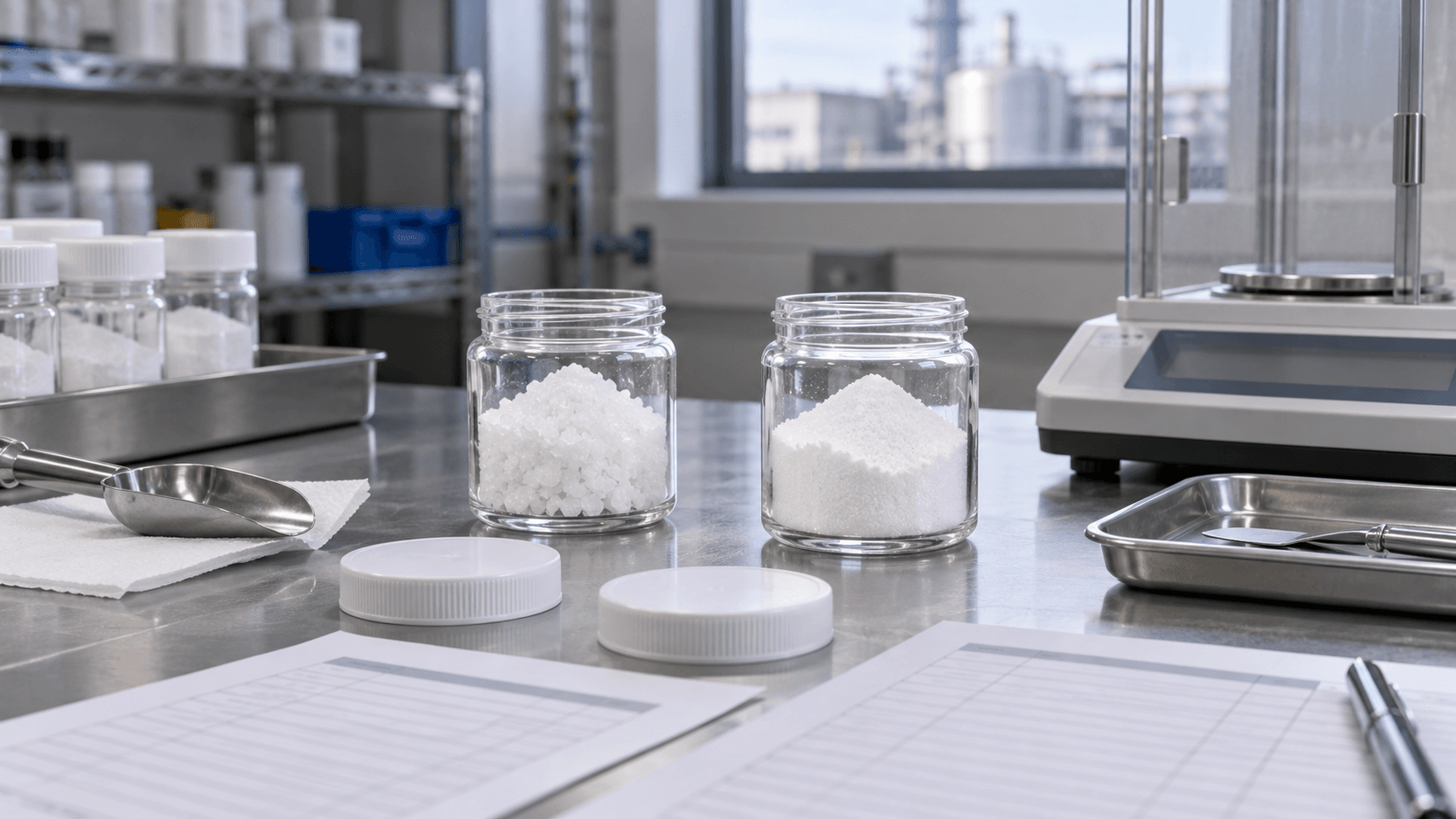
EDTA-4Na and EDTA-2Na should not be purchased as interchangeable powders solely because both contain EDTA. Start with the existing formulation, the grade being replaced and the final product conditions. MOS lists separate tetrasodium EDTA and disodium EDTA Product routes. Use the comparison below to specify the offered grade and design a substitution trial; it does not promise a universal replacement ratio.
Identify the salt and grade before comparing the quotation
The current MOS records identify both products as white crystalline powders. That shared appearance is useful for material identification, but does not establish equal assay, water content or behavior in a formulation. Ask the supplier to identify the exact salt, hydrate or water-content basis and grade on the TDS, SDS and lot COA. The offered specification should match the material named in the quotation and sample label. A family-level product description is not sufficient to approve a regulated application.
| Procurement question | What to compare | What the buyer should supply |
|---|---|---|
| Salt identity | Disodium versus tetrasodium EDTA; confirm the offered hydrate/grade | Current raw-material identity and substitution purpose |
| Assay basis | Same reporting basis and test method, rather than a percentage alone | Current TDS/COA and required acceptance method |
| pH and preparation | Same solution concentration, water and temperature | Final formulation pH and preparation procedure |
| Dissolution and compatibility | Behavior in the actual water phase and complete formulation | Process concentration, temperature and order of addition |
| Commercial specification | Grade-specific impurity, packaging and document requirements | Quantity, annual demand, destination and sample request |
Normalize assay and pH comparisons before changing the dose
Two assay percentages are comparable only when their reporting basis and methods are understood. Salt and water-content differences can make a kilogram-for-kilogram comparison misleading. Request the supplier’s basis and a proposed comparison method; do not calculate a replacement dose from the product name alone. Likewise, pH results measured at different solution concentrations or temperatures are not a controlled salt-form comparison. The salt form can affect formulation pH adjustment, but the finished formula must be tested.
Run a matched-grade sample check in the actual formulation
Keep a control made with the currently approved material. Record water conditions, preparation concentration, temperature, mixing procedure and order of addition. For each offered grade, observe dissolution and any undissolved material, measure the relevant pH, and evaluate the finished formulation against the same acceptance criteria. Include the stability or compatibility checks required by the real application. A clear stock solution alone does not prove performance in a concentrated formula or after storage.
If the trial changes both the salt and the grade, record both changes. Otherwise an apparent improvement or failure cannot be attributed to salt form alone. Agree the sample identity and trial record with the supplier before ordering a production lot. Application suitability, impurity limits and any required approvals must be confirmed for the actual grade; no food, cosmetic or agricultural approval is implied by this comparison.
Send a grade-specific RFQ
Use the EDTA-4Na Product page for a tetrasodium enquiry or the EDTA-2Na Product page for a disodium enquiry. Provide the current salt and grade, assay basis, application, final pH, water conditions, process concentration and temperature, sample acceptance criteria, order quantity, annual demand, packaging and destination. Request the offered-grade TDS/SDS and a lot COA, and state whether a substitution sample is required. Ask the supplier to confirm ambiguous specification entries rather than carrying an unexplained percentage into the purchase specification.
EDTA selection FAQ
Can EDTA-4Na replace EDTA-2Na at the same weight?
Do not assume it. Confirm salt/hydrate identity and assay basis, then agree a comparison method and validate the intended formulation.
Does the same white-powder appearance show equivalence?
No. Both MOS records describe a powder form, but appearance does not establish the grade, assay basis or formulation behavior.
How should the pH specifications be compared?
Use the same preparation concentration, water and temperature. Different test preparations do not provide a controlled comparison.
What should an EDTA sample request contain?
Name the current and proposed grades, application, formulation conditions, acceptance method and document requirements, then specify quantity, packaging and destination.