 中文
 English
 Russian

Is Seaweed Fertiliser High in Potassium?
Read the offered seaweed grade analysis before comparing potassium: distinguish K₂O, g/L and percentages, then align the quotation and sample basis.
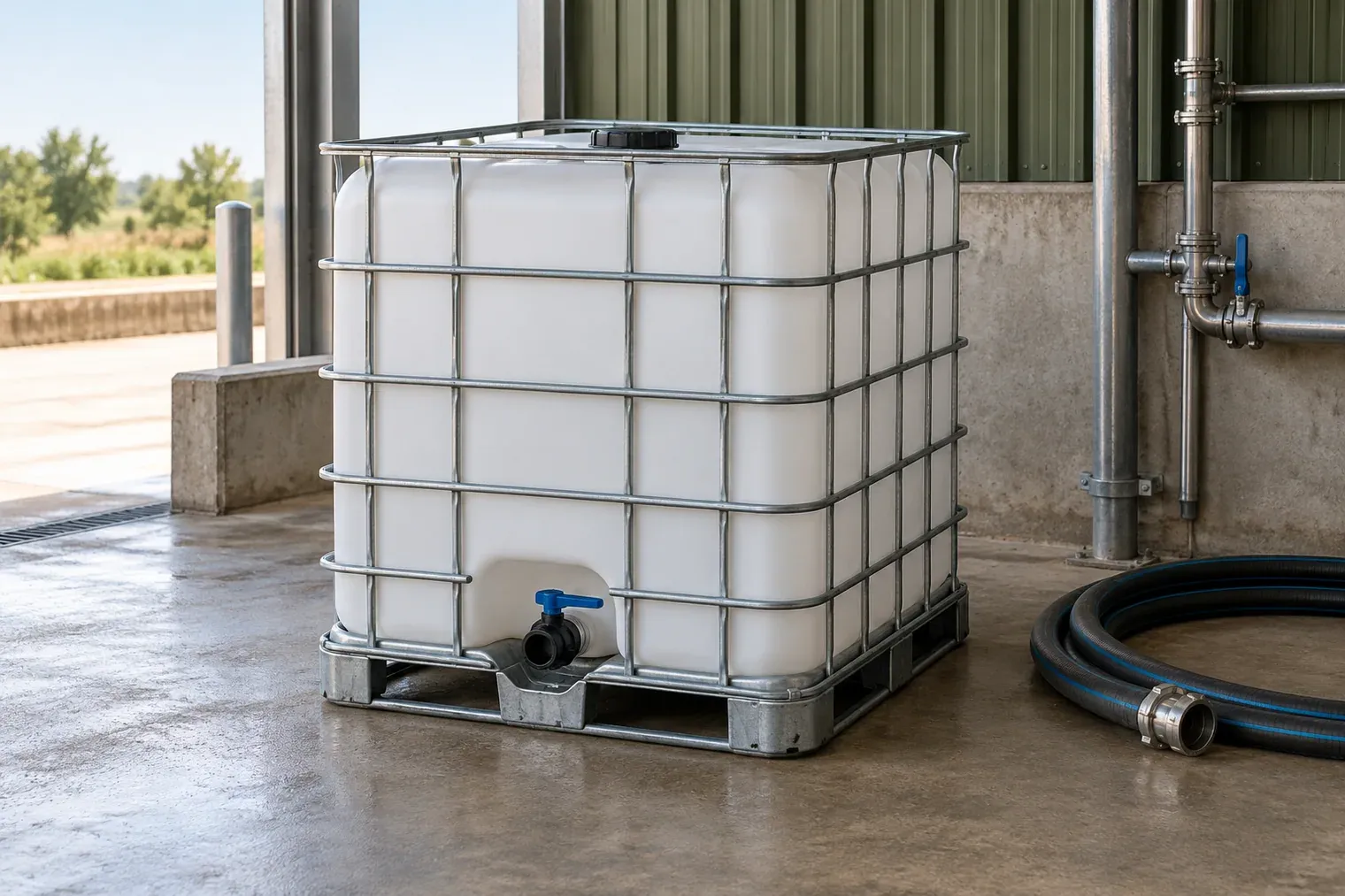
Seaweed fertiliser does not have one fixed potassium content. A seaweed-based liquid may be formulated as a potassium-focused product or as an NPK product containing nitrogen and phosphorus as well. For an importer or blender, the useful answer comes from the offered grade's analysis and its units, rather than the word seaweed or the size of the number in its name.
Before comparing quotations, establish whether the potassium declaration is elemental K or K₂O equivalent, and whether concentration is stated per litre or per kilogram. Those distinctions can change the purchasing calculation without changing a single ingredient.
Seaweed describes an input, not a fixed nutrient grade
MOS Agro lists both a potassium-focused liquid seaweed grade and a balanced seaweed product named NPK 7-12-15. Their different nutrient descriptions show why a family name cannot replace an offered-grade specification.
| Actual offered grade | Reviewed catalogue basis | Do not infer |
|---|---|---|
| Potassium-focused liquid seaweed grade | A potassium-focused product identity; its combined g/L and percentage notation needs confirmation of the declared basis | This guide adopts no unverified percentage guarantee, nitrogen/phosphorus absence or crop-performance claim |
| Balanced seaweed product named NPK 7-12-15 | Separate table rows list N ≥70 g/L, P₂O₅ ≥120 g/L and K₂O ≥150 g/L | The product name alone does not establish 7%, 12% and 15% by mass |
These are catalogue declarations, not measurements of the buyer's sample or a substitute for the current signed analysis. The balanced product's explicit g/L rows are the useful starting point. Its name and a conventional percentage-based NPK label must not be treated as identical evidence.
The nutrient requirement also matters. A more potassium-focused formulation does not automatically replace a product that supplies nitrogen and phosphorus. Identify which nutrients the application actually requires before treating a higher potassium concentration as a benefit.
Put liquid declarations on the same basis
Conventional NPK labels commonly express nitrogen, phosphate as P₂O₅ and potash as K₂O. University of Maryland Extension explains that label convention. It does not establish the units or regulatory label basis of a particular MOS grade. K₂O equivalent is a reporting convention; the notation alone does not mean the container holds potassium oxide as its chemical ingredient. AHDB provides a separate elemental-to-oxide conversion tool.
For a liquid, g/L describes nutrient mass per volume of product. Percent by mass describes nutrient mass per mass of product. Percent mass/volume describes grams per 100 mL. Ask which quantity the percentage means before using it in a calculation.
With confirmed analysis C in g/L and density ρ in kg/L at the agreed reference temperature, the corresponding mass percentage is C ÷ (10 × ρ). If the declaration is genuinely percent mass/volume, its numerical percentage is C ÷ 10. The two expressions are not interchangeable unless the required assumptions hold.
Turn a concentration comparison into a purchasing comparison
Once the same nutrient expression and analytical basis are confirmed, compare the quantity of that declared nutrient rather than equal package counts. For Q litres of a product declared at C g/L, the calculated quantity is Q × C ÷ 1,000 kilograms on that declared basis. A quotation per kilogram of product needs the appropriate mass-based analysis, or a confirmed density conversion, before comparison with a quotation per litre.
The same logic applies to cost: divide the quoted product cost by the calculated quantity of the agreed nutrient expression. Keep K and K₂O equivalent separate throughout. Check net fill, the stated concentration basis, lot acceptance and the temperature basis for any volume-to-mass conversion. Do not add nitrogen, phosphorus and potassium declarations together as though they were one interchangeable nutrient.
This normalisation answers a purchasing arithmetic question. It does not demonstrate nutrient availability to the crop, yield, safety at a proposed rate, storage stability or compatibility with another input. Differences in the rest of the formulation may matter even when two quotations have the same cost per unit of declared potassium.
Specify the sample before the crop programme
Ask for the exact offered grade and a current analysis identifying the nutrient expression, units, method and acceptance basis. For a liquid, agree whether quantity and net fill are by mass or volume. State the intended application, other inputs to be combined, water conditions and the questions the sample must resolve. Application rates and any crop-specific programme require an appropriate agronomic assessment; this guide supplies neither a universal dose nor an efficacy result.
Use the existing potassium-focused grade enquiry or balanced NPK grade enquiry with quantity, packaging and destination, and request current TDS, SDS and lot COA where applicable. A useful comparison ends with an identified grade, a clear analysis basis and an interpretable sample plan—not an assumption that every seaweed product is a high-potassium substitute.