中文
 English
 Russian

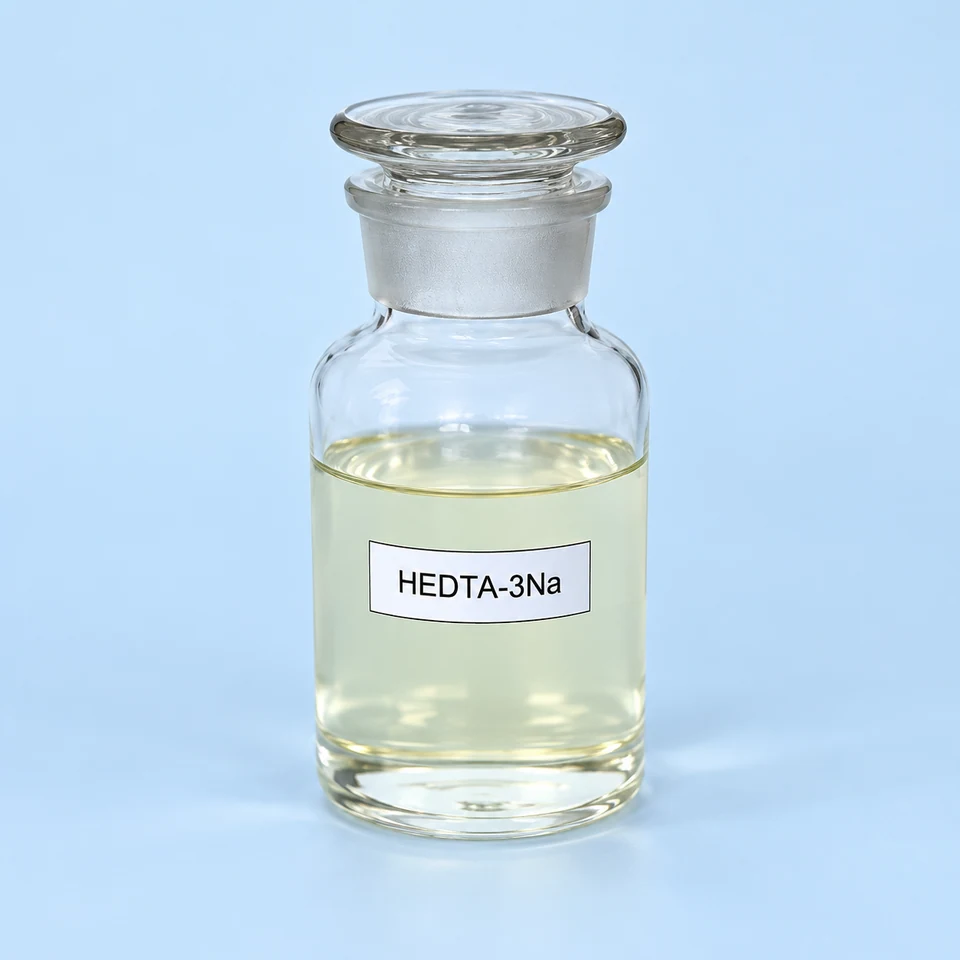
Technical specifications
Control Parameters
| Test parameter | Standard |
|---|---|
| Content | 39.00% Min. |
| pH (1% aqueous solution, 25°C) | 11.0-12.0 |
| Density (g/mL, 20°C) | 1.27 Min. |
| Appearance | Light yellow liquid |
Basic Information
| Alternative Product Names | Trisodium HEDTA salt |
| Molecular Formula | C₁₀H₁₅N₂O₇·3Na |
| Molecular weight | 344.2 |
| CAS Number | 139-89-9 |
| Packaging | 250 kg drum, 1250 kg IBC container, or as per customer request. |
| Storage | Store in a cool place, in tightly closed containers, in a dry, well-ventilated room. |
Additional specifications and supply
| Parameter | Details |
|---|---|
| Color (Hazen) | ≤ 300 |
| Chloride (Cl⁻) | ≤ 0.01% |
| Sulfate (SO₄²⁻) | ≤ 0.05% |
| Chelating value | ≥ 120 mg CaCO₃/g |
| Lead (Pb) | ≤ 0.001% |
| Packaging material | Plastic drums or IBC containers |
Product description
Product overview
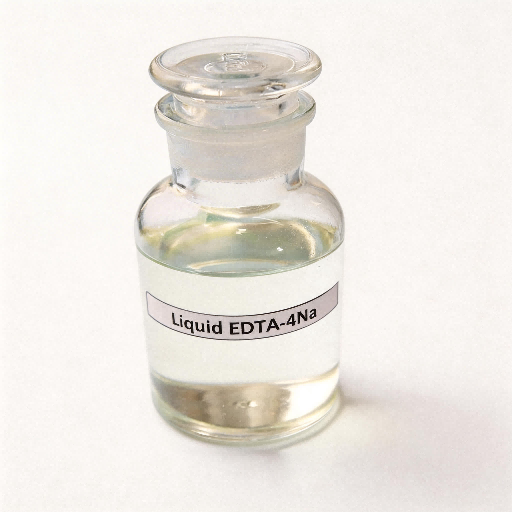
Trisodium hydroxyethylethylenediaminetriacetate (HEDTA, trisodium salt) solution is a light yellow liquid, CAS No. 139-89-9, content ≥39.00%, molecular weight 344.2, formula C₁₀H₁₅N₂O₇·3Na. It is a highly effective chelating agent capable of forming stable complexes with various metal ions.
Product Features
- Content ≥39.00%, Guaranteed High Quality and Purity
- The tabulated pH refers to the stated aqueous dilution and test temperature.
- Liquid form, convenient for dosing and application
- High chelating capacity for trivalent iron ions
- High efficacy in neutral and alkaline environments
- Widely used in various industrial sectors
Chemical Properties
As an aminopolycarboxylic acid chelating agent, HEDTA trisodium salt has excellent complexing ability with metal ions. Its sodium form is readily soluble in water, making it convenient to use. The tabulated pH is a quality-control result under the stated dilution and temperature conditions; it does not define a universal optimum pH for a customer's process. Identify the target metal ions, their concentrations, competing ions, formulation pH and temperature when requesting grade-specific application guidance. Confirm the proposed grade's TDS, SDS, batch COA items and a representative sample test before agreeing an operating window.
Area of application
Industrial cleaning
In industrial cleaning, used as a high-efficiency chelating agent capable of effectively binding metal ions, improving cleaning efficiency and stability.
Textile printing and dyeing
Used to control metal ions in textile dyeing and printing processes, preventing the influence of metal ions on dyes, improving color uniformity and fastness.
Metal surface treatment
Used in metal surface treatment processes for chelating metal ions, preventing oxidation and corrosion of metal surfaces, improving processing quality.
Chemical synthesis
Important chemical raw material and intermediate for chelating agents, used for controlling metal ions in various chemical syntheses.
- Store in a cool place in tightly sealed containers
- Store in a dry, well-ventilated place
- Avoid high temperatures and direct sunlight
Frequently asked questions
The content of trisodium hydroxyethylethylenediaminetriacetate in this product is ≥39.00%, representing a high-concentration chelating agent solution. The content indicator is controlled by strict factory testing standards, ensuring each batch meets or exceeds specified requirements.
pH of a 1% aqueous solution of the product (25°C) is 11.0-12.0, indicating strong alkalinity. Specific gravity (20°C) ≥1.27 g/mL, which is higher than that of ordinary aqueous solutions. These are specification descriptors under the stated test conditions, not proof of chelating performance or the working pH of a finished formulation. Confirm the test conditions and relevant batch COA items with the supplier.
HEDTA trisodium salt is a broad-spectrum chelating agent that effectively binds various metal ions, including iron (Fe³⁺, Fe²⁺), calcium (Ca²⁺), magnesium (Mg²⁺), copper (Cu²⁺), zinc (Zn²⁺), manganese (Mn²⁺), and others. Its ability to chelate ferric ions is particularly high, with maximum efficiency under neutral and alkaline conditions.
HEDTA and EDTA belong to the class of aminopolycarboxylic chelating agents. The main difference is that HEDTA has a higher chelating capacity for ferric ions, especially under neutral and alkaline conditions, whereas EDTA is effective over a wider pH range. The presence of a hydroxyethyl group in the molecular structure of HEDTA provides better compatibility in some application systems.
This product is a clear liquid ranging from light yellow to yellow with no odor. The liquid form is convenient for direct use or dilution, requiring no heating for dissolution. As a sodium salt, the product has good water solubility and is miscible with water in any proportion.
HEDTA (hydroxyethylethylenediaminetriacetic acid) is a modified derivative of ethylenediaminetetraacetic acid with formula C₁₀H₁₅N₂O₇·3Na and molecular weight 344.2. The structure contains nitrogen atoms and carboxyl groups that provide multiple coordination sites for forming stable five- or six-membered chelate complexes with metal ions. Three sodium ions are present via ionic bonds, giving the product good water solubility.
Under proper storage conditions (cool, dry place, sealed container), HEDTA trisodium salt solution is stable, with a shelf life of more than 12 months. The product is an alkaline solution, resistant to microbial attack, with good chemical stability. Avoiding high temperatures and direct sunlight helps to further extend the shelf life.
The table reports pH for the specified aqueous dilution; that result alone does not establish the pH or handling requirements of the supplied concentrate. Obtain the current grade-specific SDS and follow its handling and storage instructions. Confirm container and equipment compatibility for the actual concentration and process conditions with the supplier.
Application suitability must be evaluated for the particular metal ions, their concentrations and competing ions at the formulation's actual pH and temperature. The diluted-solution pH in the specification table is not a universal application window. Agree a representative test and acceptance criteria with the supplier; neither an optimum pH range nor a dosage can be established from that QC entry alone.
Send Inquiry
Please fill in the following information, our commercial team will contact youWithin 2 working daysWe will reply to you.
Products of the same series
Other chelating agent products